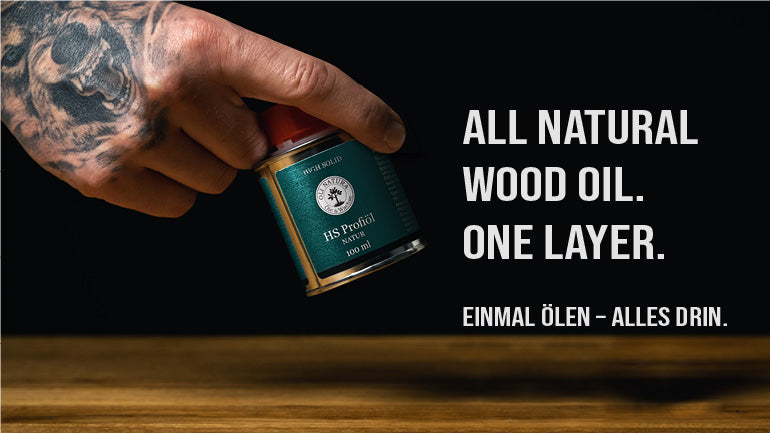
Oak wood, valued for its durability, presents the dilemma of tannin stains caused by tannic acid. These stains are caused by moisture and contact with iron/metal. But how can tannin stains be removed? For example, with our OLI-NATURA Tannin Remover. This video shows how it works.
Oak wood, which is particularly popular, contains a high proportion of tannic acid, known as tannins, which occur both in the bark and in the wood of the oak. However, tannic acid is water-soluble and plays a key role in the formation of unsightly water marks and black stains on wood surfaces.
WHEN DO BLACK STAINS OCCUR?
Black stains occur particularly when tannic acid comes into contact with iron or metal particles and water. This can happen, for example, when a metal can is placed on a damp oak wood surface or iron table legs are placed on freshly mopped oak flooring. Even metal shavings can cause such discoloration. The resulting oxidation reactions lead to permanent, dark discoloration that cannot be easily removed using conventional cleaning methods. Here we provide practical solutions for preventing and treating them.
MEASURES AGAINST TANNIN STAINS:
-
Prevention by water popping:
To prevent tannin stains from forming, it is recommended to wet oak wood before oiling it. This traditional technique, known as water popping, helps wash out some of the tannins. A splash of intensive or exterior cleaner further reduces the tannins’ reactivity.
-
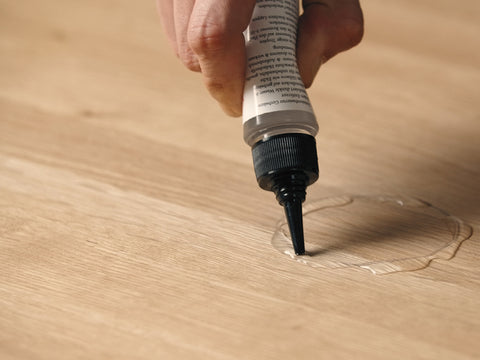
Treating existing stains: Not every oak wood table or floor has been pretreated using the traditional wetting technique, which can result in unwanted stains. In this case, our OLI-NATURA Tannin Remover based on oxalic acid provides a remedy. OLI-NATURA Tannin Remover can simply be dripped onto the affected area. After allowing it to work briefly, the area should be wiped with a damp cloth and re-oiled. Alternatively, the stain can be carefully sanded out and then re-oiled to restore the appearance of the wood.
STEP BY STEP - Instructions for the Tannin Remover:

2) Dampen a cotton cloth with lukewarm water and wipe over the affected area. 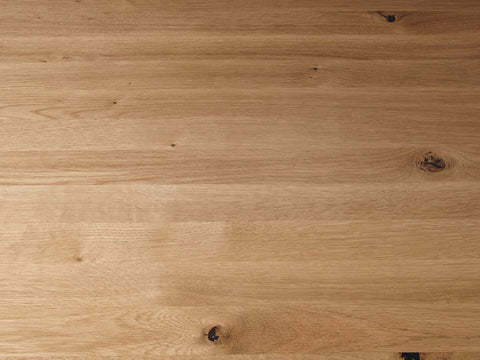
3) Allow the surface to dry thoroughly. The area may now appear lighter than the rest of the surface. 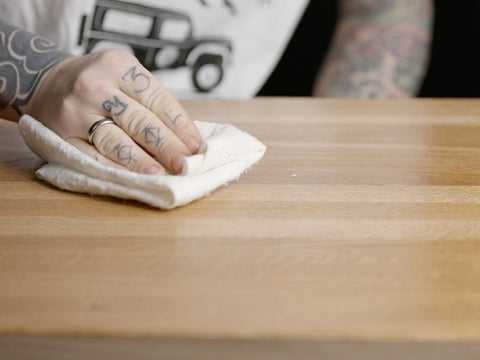
4) It is therefore important to subsequently treat the area with oil and wax to protect the cleaned surface again.
Which oil or wax is right for me?
If you would like to buy a wood oil, the selection may initially seem huge and overwhelming. We will help you make your decision and show you which OLI-NATURA oils & waxes best suit you or, more precisely, your project. Our experts will quickly and easily recommend a suitable wood oil, answer your product questions, and provide application tips. We are happy to help with any questions by telephone at 037208/84-488 or by email at faq@oli-lacke.de.